


I am always on the lookout for any tips to get more productive. I mean, everyone wants to get more productive, right? To get more done in less time. There is a lot of productivity method floating around. I am sure you have heard of some of it. Getting Things Done, Eat the Frog, Time Blocking, OKRs, Sprints, The Action Method, and so on. All of these methods try to help you to have perfect control over your time.
However, in Four Thousand Weeks, Oliver Burkeman presents a different approach to productivity and time management. Burkeman argues that you can never have perfect control over your time. That it is delusional to think that you can get everything done. And the reason that managing time feels like such a struggle is that we are constantly trying to master it.
In this post, I summarize some of Burkeman's approaches to time management that help me look at time management differently. I also outline a set of practices I hope to use in my daily life when dealing with productivity and time management issues.
How to Approach Time Management

Too Much to Do
Do you ever feel like you have too much to do and not enough time to do it? You are not alone. There are just so many things. Works to submit, movies to watch, places to visit, etc. For most people, this can be frustrating and overwhelming. But you need to accept this: There will always be things to do. More than you can ever finish them.
Tough Choices
Now that you know that there are just too many things to do. You need to understand that you can not avoid tough choices. You are limited. Your time is limited. You simply can not get everything done. You have to choose. Think about what matters most to you. Then you make your decisions.
World does not run at your preferred speed
Things progress just the way they are. No matter how hard you might wish they were not. You need to work with this fact. Only then can you really make an impact on your situation. Problems often arise when you try to rush things or postpone things. You can not push the pace or slow it down.
You can not predict the future
You can't know in advance if an experience will turn out to be painless and well. Often people delay things because they worry about what will happen in the future. Or rush things in the hope of "getting there" quicker. But you can not tell what will happen in the future. So instead of imagining things too much, make a decision. Do the work or don't do the work. Just stop fidgeting over things you can't control.
It does not matter
Stop overvaluing your existence. This will only lead to an unrealistic definition of what it would mean to be successful. You don't have to have impressive accomplishments. From a cosmic viewpoint, when it is all over, it will not have counted for very much anyway. Don't undervalue things because you think they are not "significant" enough. Find meaning in your daily mundane life.
Daily Practice
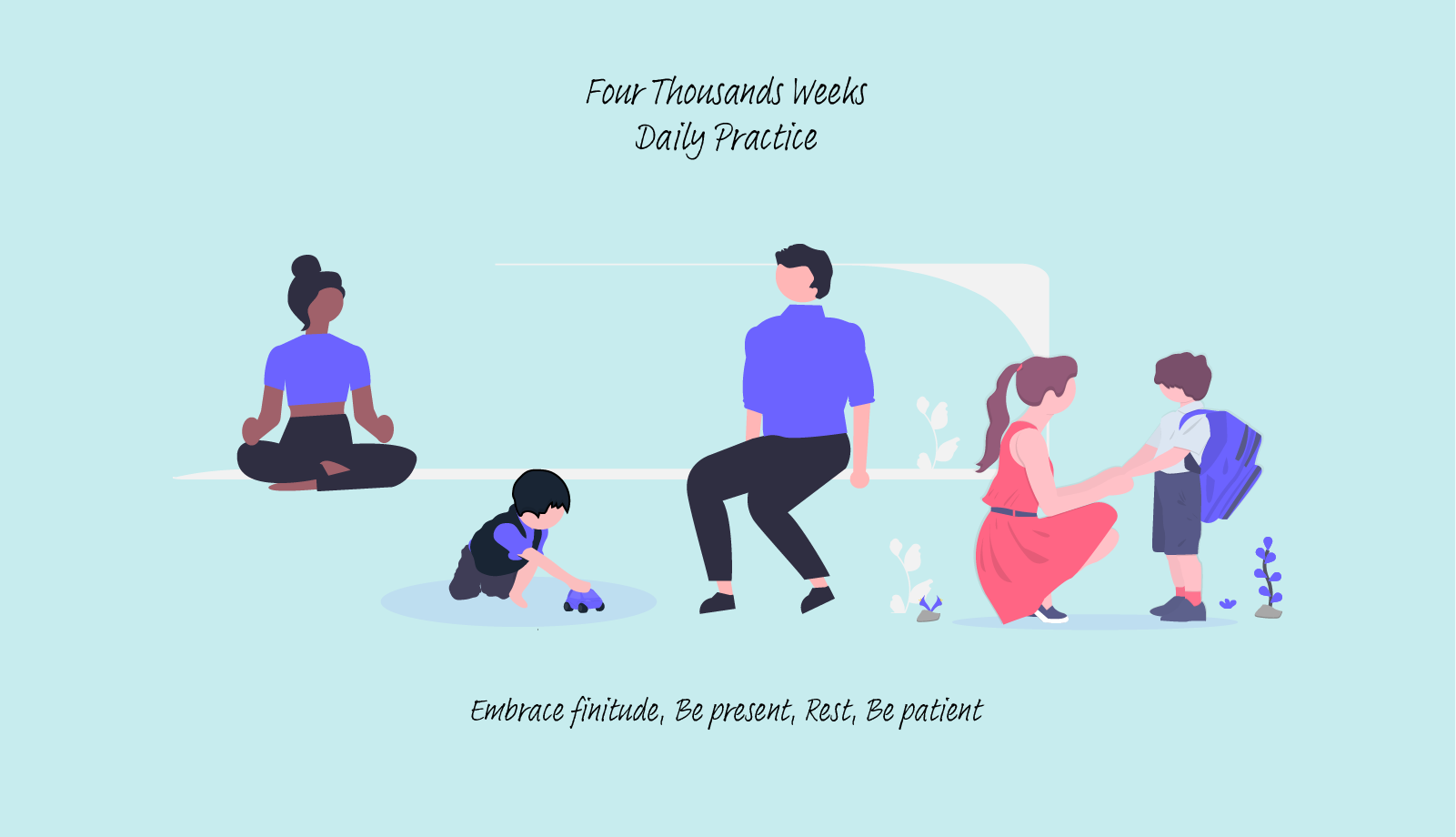
Embrace Finitude
Embrace the truth. You have limited time and limited control over time. Only by accepting this reality can you get to accomplish more of what matters and feel more fulfilled about it.
Be Present
Learn to stop focusing exclusively on where you are headed at the expense of focusing on where you are. Do not treat everything you do as the groundwork for something else. You are already living in the moment. You do not need to modify your relationship to the present moment in time. Just know that you are here now.
Rest
Modern people are so used to working so much that rest is difficult to do. Even in their spare time, people often do stuff related to their work. But spare time is not time to "invest" in your personal growth. Accept that your days are not progressing toward a perfect future of invulnerable happiness, where things are calmer, better, and more fulfilling. Where you can finally rest. That future may never actually exist. So learn to rest for the sake of rest now.
Be Patience
Things are the way there are, no matter how hard you wish they were not. Your only hope of having any real influence over the World is to work with that fact. You want to move things faster, but know that moving faster can be counterproductive. Working too hastily will lead to more errors, which you will have to go back to correct.
You will feel less anxious when you finally face the truth that you can not dictate how fast things go. So, be willing to stop, to stay where you are. Engage in the journey instead of badgering reality to hurry up.
End note
We can not change how time works, but we can change our attitude towards it. Instead of trying to control every minute of a day, accept that you are limited. There are simply too many things you need to do. Learn to make tough decisions. Be patience. Be here now. And when it is time to rest, well, rest.
Comments
Join the discussionNo comments yet. Be the first to comment.


